
Wireless Microphone Guide: Why UHF Is the Best Choice for Karaoke
What Is a Wireless Microphone?
A wireless microphone is an audio device that captures vocals and transmits them as radio frequency (RF) signals to a receiver, entirely eliminating the need for physical audio cables. In home entertainment and karaoke environments, these systems provide performers with total physical mobility while delivering high-fidelity, uncompressed sound directly to the amplification system.
For decades, the physical audio cable was the literal and metaphorical anchor of live performances, restricting movement and creating constant trip hazards. Instead of relying on a copper wire to carry the audio signal to a mixing console, a wireless setup utilizes the invisible electromagnetic spectrum as its bridge. This technological leap allows families hosting a backyard BBQ or vocalists performing on stage to interact naturally with their audience, completely free from spatial limitations.
Core Components of a Wireless Microphone
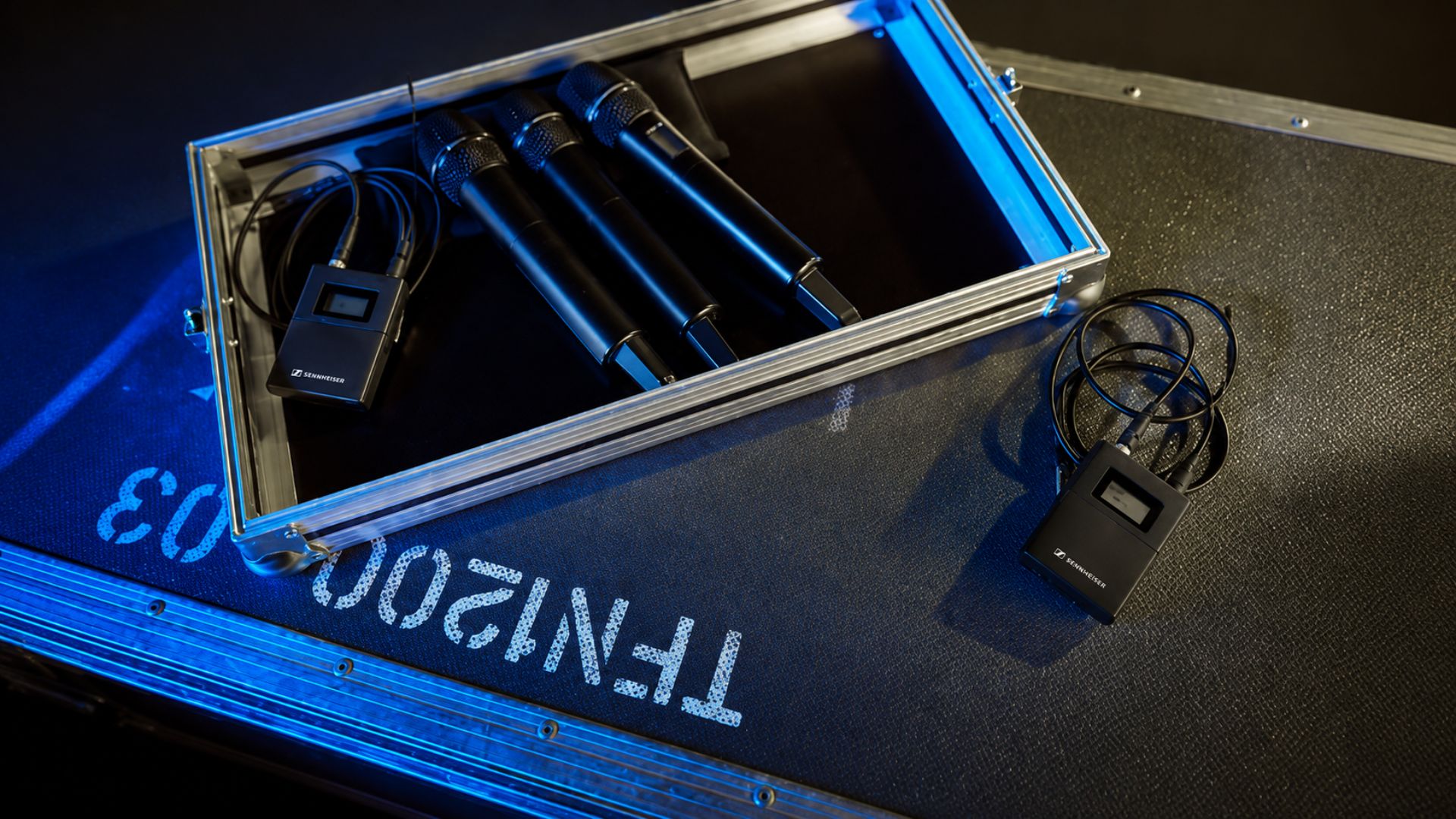
To fully appreciate the freedom these devices offer, it is essential to understand their physical architecture. Unlike a traditional wired microphone, which is a single piece of hardware, a complete wireless ecosystem is built upon three distinct and interdependent components:
- The Microphone Capsule: This is the acoustic heart of the system. The capsule is responsible for the precise conversion of acoustic energy, the sound waves generated by a human voice into electrical signals. When a performer sings, the sound waves strike a highly sensitive diaphragm inside the capsule, translating mechanical vibrations into electrical voltage.
- The Transmitter: Once the voice becomes an electrical signal, it must be sent through the air. The transmitter is the engine that modulates this signal into a radio frequency (RF) wave. In the context of karaoke and live vocals, this transmitter is physically built directly into the chassis of a handheld microphone.
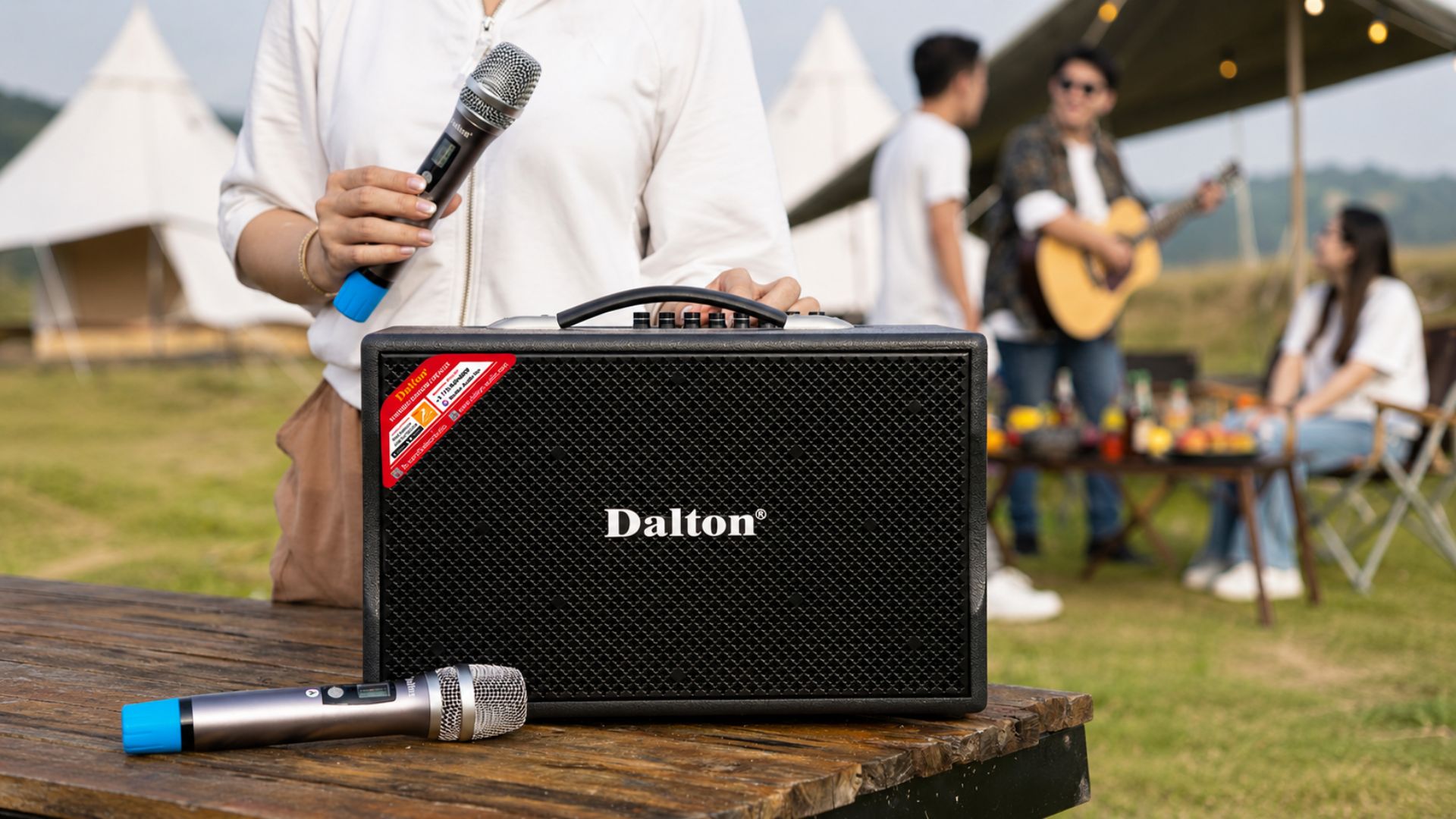
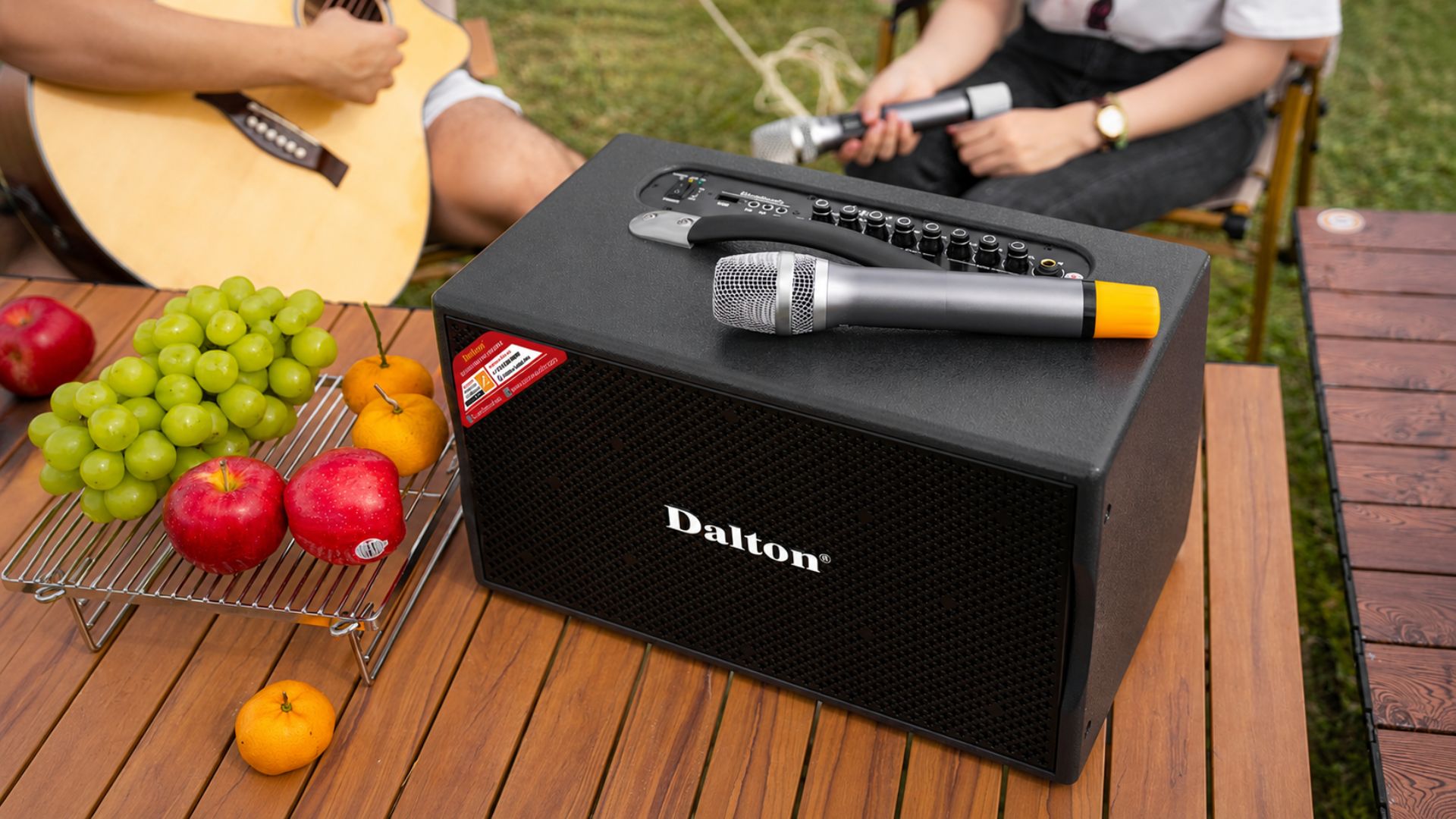
- The Receiver: The receiver is the final destination for the invisible radio waves. It intercepts the RF signal transmitted by the microphone, decodes it back into standard analog audio, and routes it to the speakers. Traditionally, this receiver is a separate, bulky external box that requires complex cable routing to an audio mixer. However, modern all-in-one ecosystems such as Dalton Audio’s portable party speakers or outdoor speakers seamlessly integrate this advanced receiver technology directly into the speaker architecture itself.
What Does UHF Mean?
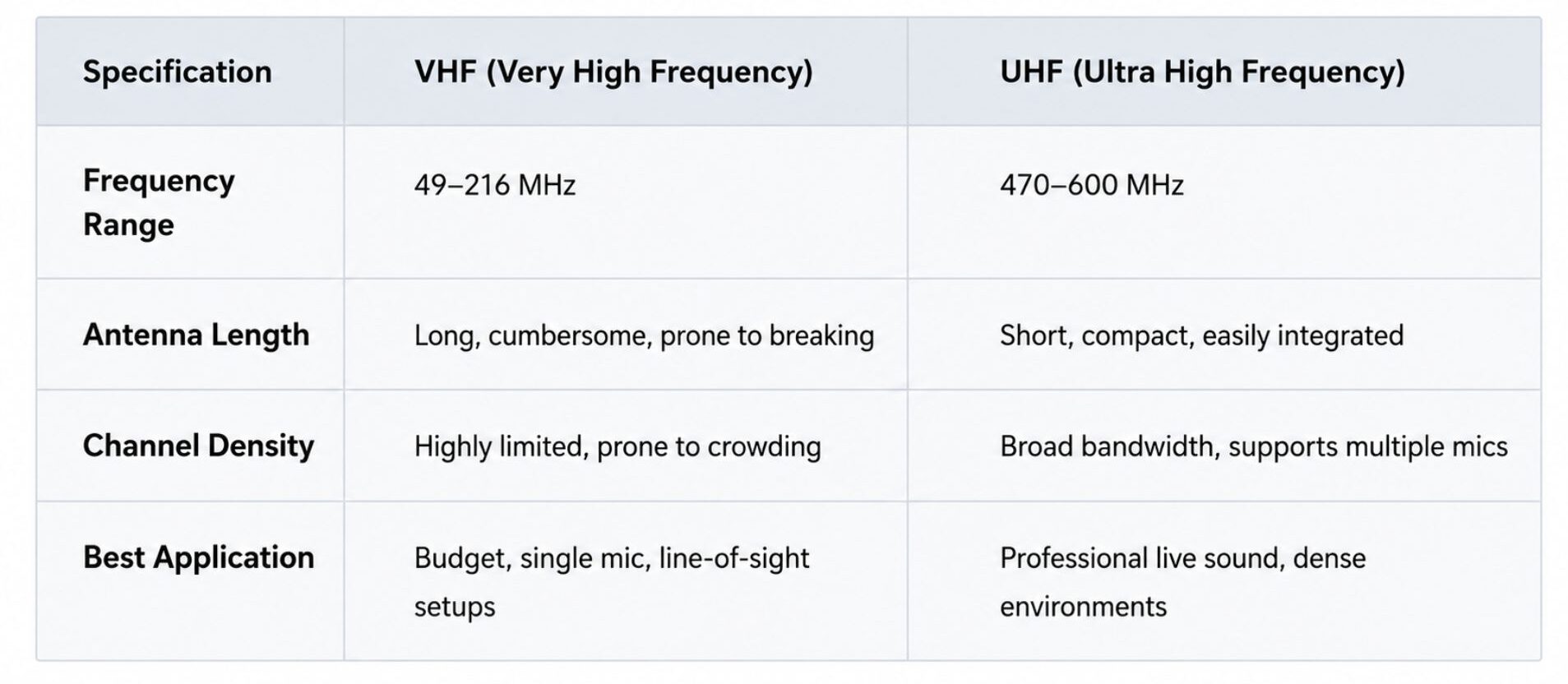
UHF stands for Ultra High Frequency, designating the radio spectrum band situated between 300 MHz and 3 GHz. Professional and high-end consumer audio equipment operates primarily within the specific 470-608 MHz UHF range.
To understand why audio professionals swear by UHF for any reliable wireless microphone setup, one must look at the fundamental physics of the electromagnetic spectrum. In radio transmission, lower frequencies inherently yield longer wavelengths. This longer wavelength is a critical physical advantage: it offers superior signal penetration through physical obstacles—such as thick walls, structural pillars, and human bodies—ensuring maximum resistance to interference.
“A high-frequency signal, like a standard 2.4 GHz Wi-Fi band, tends to bounce erratically off surfaces in crowded spaces, rapidly losing power and causing audio dropouts. Conversely, lower-frequency UHF signals – like 500 MHz – however, punch through these obstacles with ease.”
Recognizing this undeniable electromagnetic reality, Dalton Audio specifically engineers its karaoke hardware to utilize dedicated UHF spectrums rather than cheaper, highly congested 2.4 GHz alternatives. This engineering choice prioritizes flawless, uninterrupted performance for every event, no matter the spatial constraints.
UHF vs VHF
UHF vs Bluetooth
“UHF technology transmits radio frequency (RF) signals — whether analog or digital — with near-zero latency, ensuring the vocals remain perfectly synchronized with the backing music.”
How Does a UHF Wireless Microphone Work?
A UHF wireless microphone converts acoustic vocal energy into an electrical signal, which is then processed by an internal compander circuit to compress its dynamic range.
Step 1: Sound Capture
The process begins inside the microphone’s grille at the dynamic capsule. When you sing, the acoustic sound waves hit a highly sensitive diaphragm. Attached to this diaphragm is a tiny voice coil suspended within a magnetic field. As the sound waves cause the diaphragm to vibrate, the coil moves back and forth, generating a tiny alternating electrical voltage. At this stage, your physical voice has successfully been translated into an analog electrical signal.
Step 2: Signal Processing Inside the Transmitter
Before this raw electrical signal can be broadcast over radio waves, it must be conditioned to prevent background noise and static. This is where the internal compander – a portmanteau of compressor and expander – comes into play. The compander actively compresses the audio’s dynamic range. For instance: taking a wide 60 dB dynamic range and squashing it down to 30 dB for transmission. This compression is crucial because it keeps the audio signal robust and significantly minimizes the transmission noise floor. Additionally, premium transmitters inject an inaudible 32.768 kHz pilot tone into the signal. Think of this pilot tone as a digital lock and key security signature that travels alongside your voice.
Step 3: Over-the-Air Transmission
Once the audio is compressed and tagged with the pilot tone, the transmitter’s internal circuitry modulates this combined signal onto a specific UHF radio carrier wave, for example: at 550 MHz. This invisible UHF wave is then broadcasted outward from the microphone’s internal antenna, easily penetrating living room walls, furniture and crowds of people at the speed of light.
Step 4: Receiver Recovery
The external receiver intercepts this UHF wave using its antennas. Before it lets any sound pass through to your speakers, the receiver’s squelch circuit actively searches for that specific 32.768 kHz pilot tone. If the pilot tone is missing – meaning the microphone is turned off or the signal is just random RF interference – the squelch circuit keeps the receiver strictly muted, preventing loud, damaging static bursts from destroying your speakers. Once the pilot tone is verified, the receiver accepts the audio signal and sends it to the expander half of the compander circuit. The audio is mathematically expanded back to its original 60 dB dynamic range, restoring its full depth and clarity.
Benefits of UHF Wireless Microphone for Karaoke
Utilizing UHF wireless microphone brings professional-grade stage technology directly into the living room. It empowers families to host dynamic backyard BBQs or indoor parties with up to 300 feet of flawless wireless range, zero vocal delay, and the ability to run multiple microphones simultaneously without fear of wireless interference.
The true value of a UHF wireless system is realized not in a laboratory, but during a lively, real-world event. Imagine hosting a four-hour backyard BBQ with friends and family. With a standard 2.4 GHz or Bluetooth microphone, simply stepping inside the house to grab a drink while singing would result in immediate audio dropouts, as the weak signal struggles to pass through exterior walls and actively competes with your home Wi-Fi router.
However, due to the robust penetration capabilities of the UHF spectrum, singers can move freely between the outdoor patio and the indoor living room without the signal dropping. It grants performers the absolute freedom to engage with the crowd, dance, and walk around a large house or yard without ever tripping over hazardous cables.
How to Prevent Signal Dropouts
Even with the superior penetration power of UHF, signal dropouts can still occur in complex indoor environments. The most common culprit isn’t a lack of power, but a physics phenomenon known as multipath interference.
When you sing into a wireless microphone, the signal doesn’t just travel in a straight line to the receiver. It radiates outward. While the main wave travels directly to the antenna, a portion of the radio wave will bounce off dense, hard surfaces in the room—like concrete pillars, metal doors, or large glass windows. When this reflected, slightly delayed wave collides with the direct wave inside your receiver, they can completely cancel each other out out-of-sync. This instantly cuts your audio, creating frustrating “dead spots” on stage or in your living room.
“The ultimate cure for multipath interference is a True Diversity receiver. Unlike standard budget receivers that rely on a single circuit, True Diversity systems are equipped with two independent antennas connected to two separate radio circuits.”
The system analyzes both signal paths at lightning speed. If Antenna A is hit by a wave cancellation, the system instantly and silently shifts the audio feed to Antenna B, which is positioned out of the dead spot. Dalton Audio specifically integrates this premium architecture to guarantee flawless performance, no matter how physically complex your venue is.
How to Eliminate Feedback
Feedback is not a glitch, it is an infinite loop of sound. It happens when the microphone hears the audio coming out of your speakers, sends it back to the amplifier to make it louder, and then hears that louder sound again. This loop repeats in milliseconds until it builds up into a deafening squeal. Standing in front of a speaker does not always cause feedback if the volume is very low but at karaoke party volumes, the loop is almost guaranteed to trigger.
The industry standard is the Cardioid pattern. Imagine a flashlight shining directly out from the front of the microphone. A cardioid capsule only “sees” and captures the sound directly in front of it (your mouth) and is intentionally engineered to be deaf to sounds coming from the rear. This is why standing behind the speakers breaks the feedback loop, the speakers are blasting sound toward the audience, and the “deaf” back-side of your cardioid microphone is pointing at the speakers, effectively ignoring the loud music.
Beyond physical placement, you can fix feedback using vocal equalization techniques. Feedback usually happens at specific frequencies.
- Fixing Boominess: When you hold a microphone too close to your lips, the bass frequencies are artificially boosted. Apply a high-pass filter or cut the EQ around 200-500 Hz to stop low-frequency rumble.
- Fixing Squeals: If the feedback is a piercing high pitch, cut the EQ frequencies between 5-8 kHz, similar to a de-esser to tame the harshness.

How to choose the best UHF Wireless Microphone
The best wireless microphone for karaoke should feature a UHF transmission protocol to guarantee zero latency, a cardioid dynamic capsule to actively reject background noise, and an intuitive auto-scan feature for easy setup. Buyers should carefully evaluate their local RF environment, the necessity for dual microphones, and their specific budget before purchasing.
When evaluating a wireless microphone system for your home, you must test and compare its capabilities across three core operational metrics: physical range, battery logistics, and channel configurations.
Wireless Range Testing
While a UHF wireless microphone may advertise a theoretical 300-foot free-space range, the real-world usable range indoors is typically 100 to 150 feet due to attenuation from walls, furniture, and people. UHF signals easily penetrate standard residential drywall and wood, but highly dense materials like concrete, brick, and Low-E glass will significantly reduce the effective operational range.
Understanding wireless range requires distinguishing between a marketing specification and an acoustic reality. When a manufacturer claims a 300-foot range, that measurement is taken in an open field with a perfect, unobstructed line-of-sight between the microphone and the receiver. However, non-line-of-sight environments—like your home—introduce RF attenuation, the loss of signal strength as radio waves pass through physical matter. The materials constructing your home drastically dictate your microphone’s range:
- Low Attenuation: Standard residential drywall, wooden doors, and clear glass allow UHF frequencies to pass through with minimal signal loss. You can easily sing in the kitchen while the speaker is in the living room.
- High Attenuation: Materials like thick concrete, brick walls, stucco with metal mesh, and foil-faced insulation act as massive barriers to radio energy. If your speaker is placed behind a structural brick pillar, your effective range will drop significantly.
- The Human Factor: As discussed in previous troubleshooting steps, a dense crowd of people absorbs massive amounts of RF energy because the human body is primarily composed of water.
When choosing a system, do not just look at the maximum theoretical distance on the box. Evaluate the layout of your usual party space. Dalton Audio systems are engineered with optimized transmission power that provides ample, drop-free range specifically calibrated for the realities of the largest homes and outdoor tailgating events, ensuring you stay connected exactly where the party happens.
Battery Life Testing
A high-quality UHF wireless microphone typically operates continuously upto 8 hours on a fresh set of AA alkaline batteries, largely depending on the system’s transmission power setting. Alternatively, modern systems utilizing built-in lithium-ion rechargeable batteries usually provide 10 to 12 hours of uninterrupted vocal performance per charge.
When evaluating how long a wireless microphone will last during a party, the most critical factor isn’t just the battery size, but the system’s RF transmission power, which is measured in milliwatts. A microphone transmitting at a higher mW level to push a signal through thick walls will naturally drain its power source faster than one operating in a clear, line-of-sight room.
When choosing a system, buyers must decide between two primary power logistics based on their event style:
- AA Alkaline Batteries: Providing an average lifespan of 8 to 14 hours, traditional AA batteries are the optimal choice for outdoor venues or long events without charging downtime. If a microphone dies mid-song, a quick swap takes less than ten seconds. The trade-off is the ongoing consumable cost of buying replacement batteries.
- Lithium-Ion Rechargeable: These modern systems provide 10 to 12 hours of consistent power per charge. While the microphone itself may have a higher upfront cost, there are absolutely zero ongoing consumable expenses, making them perfect for consistent, daily use in predictable home environments where a charger is always nearby.
“A crucial real-world endurance insight that many users do not realize is that leaving a microphone powered on but muted via a switch still drains the battery at nearly the exact same rate as actively singing. Because even when the audio is muted, the continuous RF carrier wave is still actively transmitting to hold the receiver link active. If you want to save battery during a long break in the party, you must power the device down completely, not just mute the audio.”
Dalton Audio understands that every user’s lifestyle is different. That is why specific Dalton models feature universally accessible, easy-to-swap AA battery compartments, while others offer modern USB-C rechargeable options. This ensures that the hardware perfectly matches the user’s specific event duration and charging access without compromising on performance.
Single vs Dual Wireless Microphones
A single wireless microphone system contains one transmitter and one receiver channel, making it ideal for solo presenters or single vocalists. Conversely, a dual wireless microphone system features two separate microphones synchronized to a single receiver box, making it the perfect, cost-effective choice for karaoke duets, wedding officiants, and panel discussions.
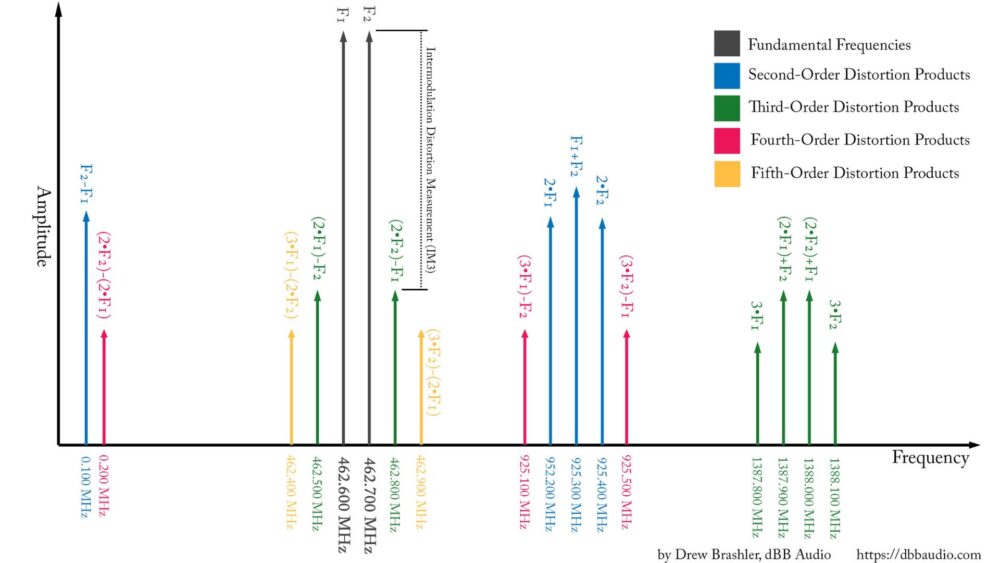
When families plan for karaoke nights, a common mistake is purchasing a single microphone system, only to realize later that they want to sing duets. Their immediate reaction is often to go back to the store and buy a second, identical single-microphone system. The most critical reason to buy a factory-paired dual system lies in radio frequency coordination. If you turn on two random wireless microphones in the same room, their radio waves will violently interact with each other.
When two active radio frequencies operate too closely together in the same physical space, they don’t just exist side-by-side. They mathematically interact to spawn new, unwanted ghost frequencies as seen in the 3rd-order and 5th-order distortion products in the graph. This phenomenon is known as Intermodulation Distortion (IMD). If one of your microphones happens to drift into these ghost frequencies, you will experience severe interference, loud static, and cross-talk hearing mic 1 on mic 2’s channel. A factory-paired dual receiver eliminates this nightmare. The internal circuitry automatically spaces the two operational channels far enough apart to prevent cross-talk and completely avoid IMD interference.
For home entertainment, a dual-UHF system is generally the vastly superior choice for families. Two people can sing simultaneously without the delays, static, or complications of manually pairing and tuning separate devices. Dalton Audio specifically engineers its dual handheld systems as the gold standard for karaoke, ensuring that the two microphones are perfectly coordinated right out of the box for flawless, interference-free duets.
FCC Frequency Rules in the United States
In the United States, the Federal Communications Commission (FCC) strictly regulates wireless microphone frequencies to prevent dangerous interference with emergency services and licensed TV broadcasts. Unlicensed consumer wireless microphones operate entirely legally within the 470-608 MHz TV bands, provided they transmit at a maximum power output of 50 mW EIRP.
When purchasing a wireless microphone in the US, navigating the legal landscape is just as important as evaluating the audio quality. The radio frequency spectrum is a finite, highly valuable invisible real estate. Over the past decade, the FCC has conducted multiple spectrum auctions, reallocating large blocks of frequencies to major cell phone carriers for mobile broadband. Because of these ongoing reallocations, older wireless microphone systems operating in the 700 MHz band are now completely illegal to operate in the US.
To operate legally without requiring a special broadcast license, modern wireless microphones must strictly adhere to FCC Part 15 regulations – Learn more at FCC.gov. There are specific operational parameters that dictate consumer compliance:
- The Legal Spectrum: The absolute safest and most stable operating environment for consumer UHF microphones is within the 470-608 MHz core band.
- Power Limitations: To prevent home users from accidentally jamming local television broadcasts or emergency communications, the FCC mandates a strict 50 mW EIRP transmission limit for all unlicensed consumer operations.
- The Duplex Gap & Guard Bands: There are highly technical restrictions surrounding the 600 MHz duplex gap and guard bands, which are small buffer zones designed to prevent interference between microphone users and cellular data networks.
Q&A
No, you cannot connect a wireless microphone directly to a smart TV because TVs lack the analog microphone preamplifiers required to process the audio signal. You must connect the microphone receiver to a dedicated karaoke speaker or an audio mixer, which is then connected to the TV.
A muffled voice is typically caused by incorrect vocal equalization or cupping the microphone grille with your hand. To fix this, apply a high-pass filter or cut the EQ frequencies between 200-500 Hz to remove muddiness and restore vocal clarity.
Yes, 2.4 GHz microphones operate on the exact same frequency band as standard home Wi-Fi routers, Bluetooth devices, and microwaves. This severe congestion is why professional audio systems rely on the UHF band instead of 2.4 GHz.
No, UHF wireless microphones operate independently of the internet or Wi-Fi networks. They use their own dedicated radio frequencies to transmit audio directly from the microphone to the receiver box.
No, dynamic capsules do not require phantom power to operate. The transmitter inside the wireless microphone is powered entirely by its internal AA or lithium-ion batteries.